


Humane Exposures Films
"It's more expensive to do nothing"
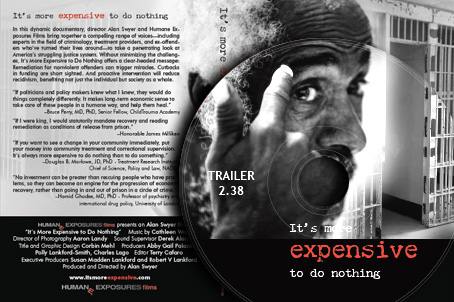
It's More Expensive to Do Nothing explores the dark and often disregarded world of criminal justice, the revolving door of institutionalization, the complexities of remediation, and the programs that have worked to help nonviolent ex-offenders succeed as self-sufficient members of society.
In recent decades, the population of American prisons has risen precipitously, and along with it the economic burden on society. What is lost in this zeal for incarceration is a grasp of the social and financial advantages of remediation, a disconnect that fails not just offenders in need of rehabilitation but also the communities that rely on lawmakers to keep them safe. The math is stagger-ingly simple: It will cost $75,000 year if a nonviolent offender returns to prison, whereas $5,000 a year will help that individual lead a productive life outside.
Conceived by Susan Lankford of Humane Exposures and directed by award-winning director Alan Swyer, It's More Expensive to Do Nothing features interviews with more than 25 experts in the fields of law enforcement, law, politics, life training, addiction treatment, and childhood development. Nonviolent offenders who have turned their lives around after successfully completing remediation and literacy programs are featured as well.
To fully explore the growing crisis in the justice system, It's More Expensive to Do Nothing steps back to examine the causes of crime and recidivism—addiction, homelessness, childhood trauma and neglect. The filmmakers usher the viewer through a range of facilities with proven track records for changing the lives of both juvenile and adult offenders. Discussed in depth is California Senate Bill 618, which provides for a multiagency reentry program to facilitate a smooth transition from prison back to the community. In a state with the highest prisoner recidivism rate in the country, remediation programs authorized under SB 618 are on the verge of losing funding, despite the fact that less than 20 percent of participants return to prison, creating savings for the state not five years from now, but today.
The message of this dynamic documentary is clear: Remediation for nonviolent offenders can trigger miracles, cutbacks can be disastrous, and proactive intervention will reduce recidivism, saving substantial public funds and benefiting not just the individual but society as a whole.
Accolades
Chief of Science, Policy and Law, National Association of Drug Court Professionals
Senior Fellow, Child Trauma Academy